Fall in Deansboro has its own charm. The leaves turn, the air gets crisp, and everything takes on that cozy, golden glow. While people are out prepping their yards for winter, it’s easy to forget trees need some attention too. This is the season for tree care, giving your trees a close check to make sure they’re healthy, sturdy, and ready for the colder months ahead.
For Deansboro homeowners, this seasonal routine can be simple: inspect the canopy and trunk, identify dead or damaged branches, check the root zone, refresh mulch correctly, and water when fall conditions are unusually dry. Properties around Deansboro, Small Corners, Forge Hollow, Hanover, and other parts of the Town of Marshall can benefit from the same basic inspection before winter weather arrives.
Keeping up with regular tree maintenance now stops little problems from snowballing into expensive disasters later. Maybe there’s a cracked branch, a dry root, or a weak spot you never noticed. Once winter hits with wind and heavy snow, those little issues can become a lot worse.
So, if you’re asking yourself, “What’s my fall tree checklist?” Here’s what you need: examine your trees, tackle problem limbs, protect their roots, and give them a good soak if it’s been dry.
This fall tree care guide is really for Deansboro homeowners aiming to keep their trees thriving year-round.
For local homeowners searching for tree care services near me, the same basic fall inspection can help protect properties throughout Deansboro, the Town of Marshall, and nearby Oneida County communities.
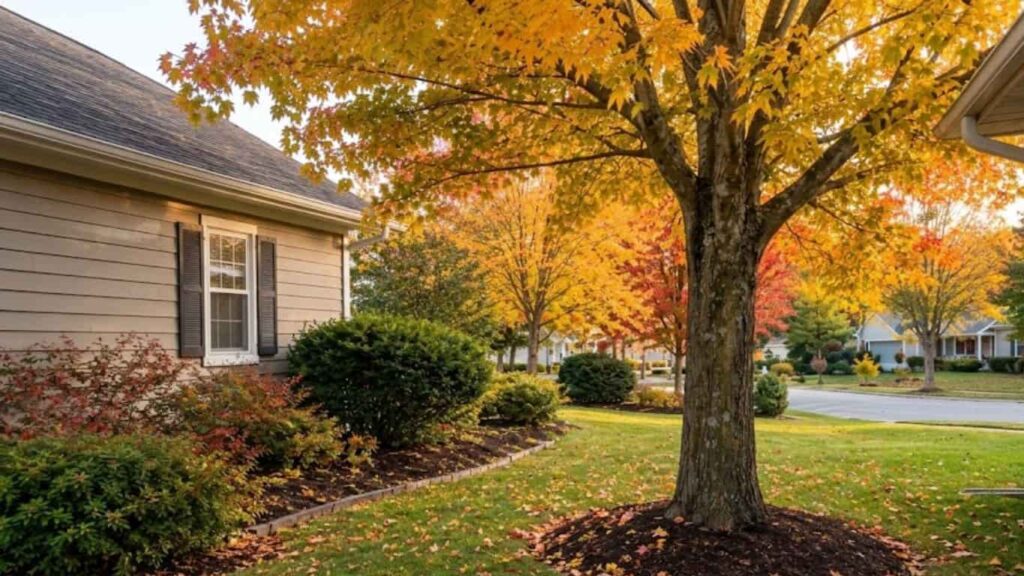
Start With a Close Look
Grab a jacket and take a slow walk around your yard. Really look at your trees; check the trunk, the branches, and around the roots. Does the bark have cracks or gaps? Are mushrooms growing near the base? Are some branches dead or rubbing against each other? Don’t ignore limbs hanging over your house, driveway, garage, or walkways. They don’t have to snap off to become a danger.
A professional tree care inspection should also consider branch attachment, trunk defects, crown dieback, decay, root-zone conditions, and the tree’s overall structural integrity.
This is especially useful for mature trees around Deansboro homes, properties along NY-12B and NY-315, and nearby areas of the Town of Marshall, where winter weather can put additional stress on weak branches and damaged trees.
Leaves can be a tip-off too. If a tree has tiny leaves, loses them early, or has big dead patches in the canopy, something’s up. Symptoms such as discolored leaves, dead branches, early leaf drop, crown dieback, and premature fall color can indicate tree stress or decline and may require an arborist’s assessment.
Summer storms bring their own drama: heavy winds and rain can leave cracks or hidden broken branches. Storm damage can also create hanging limbs and weak branch unions that may become more hazardous when exposed to winter snow and ice.
If you spot anything questionable or just have a gut feeling, call in pros like JW Tree Service at (315) 888-6696.
Prune Problem Branches
Pruning during fall is smart, but don’t go wild with the clippers. Healthy trees need most of their limbs and leaves to keep growing strong. Cutting too many branches weakens them; you want to remove only dead, damaged, or dangerous ones.
Homeowners usually prune to clear out hazards or fix branches blocking walkways, growing toward the house, or rubbing on each other. But going after big branches high up is risky. Seriously, leave that to the professionals.
Good pros know how to prune without hurting your tree, so if in doubt, get help. And never “top” a tree. Chopping its main branches back to ugly stubs leaves lasting wounds and weak structure. The International Society of Arboriculture explains that pruning should have a clear purpose and that improper pruning can create lasting damage or shorten a tree’s life.
Common professional pruning objectives include cleaning dead or weak branches, raising lower limbs for clearance, reducing selected growth where appropriate, and improving structural development. A qualified arborist considers tree species, age, health, branch structure, and the reason for each cut before pruning.
If you’ve got trees near power lines or your house, definitely call someone trained to handle it. Safety matters, and pros like JW Tree Service can handle tough jobs.
A professional tree trimming service can be especially useful for mature trees, large limbs, trees close to buildings, or branches that require climbing equipment.
Root Care, Mulch, and Water
Once you’ve checked and pruned, don’t forget the roots. Roots are out of sight, out of mind, but they’re the foundation of tree health.
Mulching is one of the easiest things you can do. It locks in moisture, keeps weeds at bay, and protects against temperature swings.
A 2 – to 4-inch layer is commonly recommended, but don’t let it touch the trunk. Spread it gently around the root area, not piling it up like a “mulch volcano.”
And water. Fall isn’t always wet enough for trees. If it’s dry, give them a deep drink. Young trees, especially, need regular watering since their roots haven’t settled in yet. It’s better to water slowly and deeply than splash a little every day, but don’t go overboard and drown them.
Trees need adequate moisture, but poor drainage and excessive watering can also contribute to decline.
Simple Fall Tree Care Guide
| Fall tree care task | Why it matters | What to watch for |
| Tree health inspection | Helps identify hazards and signs of decline | Dead branches, cracks, decay, dieback |
| Professional pruning | Improves clearance and structural safety | Weak, damaged, crossing, or hazardous branches |
| Root-zone mulching | Helps retain moisture and moderate soil temperature | Keep mulch away from the trunk. |
| Deep watering | Supports trees during dry fall conditions | Dry soil or newly planted trees |
Spotting Tree Stress
Every now and then, check for trouble signs: dead branches, cracked bark, major dieback, or big changes in the canopy. Look for exposed roots, soil shifts, or scrapes from lawn tools, especially if trees are close to walkways or driveways. Repeated bumps with mowers or trimmers shave off protective bark and add up over time.
Keep lawn gear away from trunks and use mulch to cut the competition from grass and weeds. Tree roots can extend well beyond the visible area beneath the canopy, so protecting the surrounding soil is an important part of long-term tree health.
If you see a bunch of warning signs, call in a pro. Catching issues early equals more options.
Homeowners should pay particular attention to trees that have experienced construction damage, soil compaction, repeated lawn equipment injuries, storm damage, or changes in drainage. These conditions can affect root function and overall tree stability.
Get Ready for Winter Weather
Deansboro winters can be fierce. Wind, snow, and ice take their toll. If your trees are already struggling, they’re at risk during storms.
Check those overhanging branches, especially above roofs, cars, patios, or walkways. If anything looks weak or busted, don’t wait for the first snowstorm to handle it.
Remember: not every damaged tree needs to come down. Sometimes pruning or professional support solves the risk. Depending on the tree and the defect, an arborist may recommend pruning, cabling and bracing, routine care, or removal. These options depend on the tree’s condition and the potential targets around it.
But for dead, dying, or severely damaged trees, removal could be the safest call. The International Society of Arboriculture recommends professional assessment when homeowners are concerned about a tree’s health or structural integrity. Home | TreesAreGood.org.
This matters for Deansboro homeowners because mature trees around homes, driveways, garages, and walkways can be exposed to winter snow, ice, and strong winds. Checking potential hazards before severe weather arrives gives homeowners more time to address damaged or structurally weak branches.
When Does a Tree Need Removal?
People ask this all the time. Don’t yank out a tree just because it has some dead branches. Removals are for trees that are dead, badly declining, unstable, or risky, especially if they’re near buildings or driveways. A professional tree removal service can assess the tree and explain whether removal, pruning, or another option is appropriate.
Big trees are tricky; you can’t always judge what’s going on high up or deep inside. That’s why expert advice matters.
Warning signs that deserve professional attention include extensive crown dieback, significant trunk decay, major cracks, severe storm damage, large dead limbs, or structural defects that place people or property at risk.
If removal is recommended, make sure the contractor clearly explains why removal is necessary and what other options were considered. Professional assessment can help homeowners make an informed decision instead of removing a healthy tree unnecessarily.
Why Prune?
Pruning isn’t just about making a tree look neat. It gets rid of weak, damaged, or poorly placed branches, boosts safety, and helps maintain healthy structure. Taking care of this before winter reduces the chance of branches breaking under snow. But don’t overdo it. Excessive cuts weaken a tree.
If you’re hunting for tree care services near me, find a crew with experience on your kind of trees. Ask what they plan to do and why. It’s your yard, after all.
A professional tree pruning service should be based on the tree’s condition, structure, species, location, and the reason for pruning. The goal is not simply to remove branches but to make appropriate cuts that support the tree’s long-term structure and safety.
Easy Fall Routine
Fall tree care doesn’t need to be complicated. Give your trees a quick but thorough check, prune where needed, spread mulch, and make sure they’re watered if it’s dry. Each tree is different. Species, age, soil, location, and past damage play a role.
For Deansboro homeowners, this seasonal routine can be simple: inspect the canopy and trunk, identify dead or damaged branches, check the root zone, refresh mulch correctly, and water when fall conditions are unusually dry. Properties around Small Corners, Forge Hollow, Hanover, Augusta, Clinton, Oriskany Falls, Waterville, and Sauquoit can benefit from the same basic inspection before winter weather arrives.
If a tree is large, damaged, close to a structure, or difficult to reach safely, professional help is a better option than attempting the work yourself.
If a tree is big, damaged, or tricky to reach, call in the experts. For inspections, pruning, removal, or just advice in Deansboro, JW Tree Service at (315) 888-6696 is a safe bet.
Looking for more tips? Check out TreesAreGood.org by the International Society of Arboriculture. They cover everything from tree health to risk management, pruning, mulching, and mature tree care.
Conclusion
Your trees are more than just scenery. They’re an investment in your property. They give shade, privacy, and beauty, but they need care to stay healthy. Fall is your chance to get things in order before winter sets in.
Don’t wait until a branch crashes down or you’re dealing with an emergency. Early action is easier and protects your trees and your home.
Need help or just not sure what’s going on with your tree? Give JW Tree Service a call at (315) 888-6696.
FAQ
How do I know if my tree needs removal?
If it’s dead, badly damaged, unsafe, or unstable, removal may be needed. Get a professional’s opinion.
Why should you prune a tree?
Pruning removes dead, damaged, or weak branches and makes your tree safer while helping maintain its structure.
Is fall a good time for tree inspection?
Yes. Fall is a useful time for a tree health inspection because homeowners can identify damaged branches, decay, structural defects, and other concerns before winter weather arrives.
How much mulch should I put around my trees?
2 to 4 inches of organic mulch around the roots is commonly recommended, but keep it away from the trunk.
Should I hire a pro for pruning?
Small, low branches are fine for most homeowners. For big trees or tricky spots near structures or power lines, leave it to the professionals.

Leave a Reply